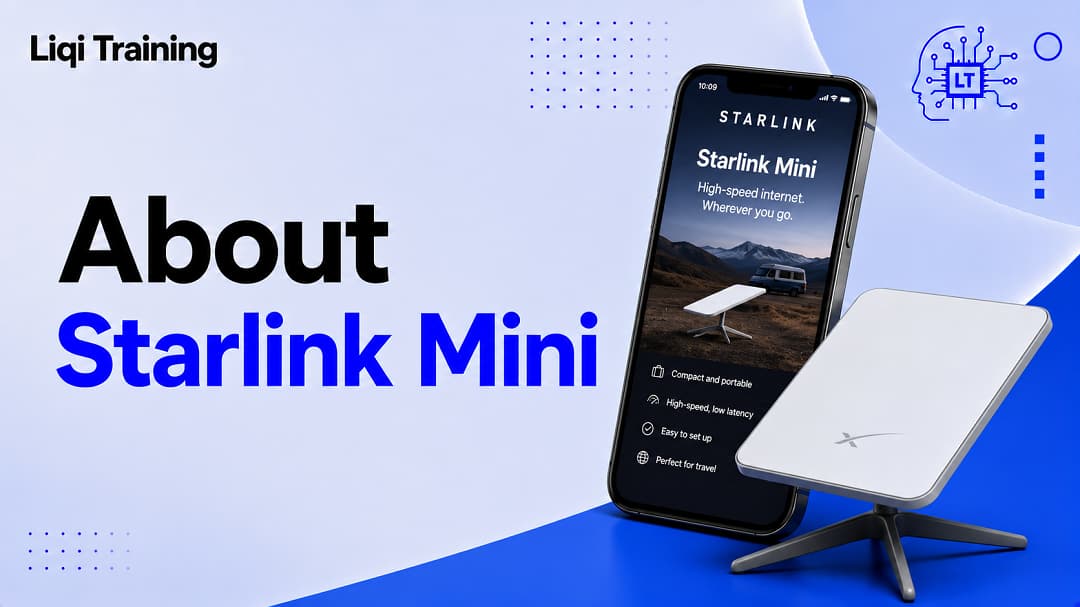
Starlink Mini is designed for portable satellite internet rather than permanent home installations. The unit combines the satellite antenna and Wi-Fi router into one compact device. It typically uses less power than the standard Starlink kit, making it easier to run from portable power sources. Setup usually takes only a few minutes using the Starlink app. Performance depends on satellite visibility, weather, network congestion, and your service plan. It is best suited to travelers, campers, RV owners, and remote workers rather than large households.
Portable internet has become increasingly important for remote workers, RV owners, campers, emergency responders, photographers, field engineers, and anyone who travels beyond the reach of reliable cellular coverage. While traditional satellite internet systems have often required bulky hardware and permanent installations, Starlink Mini introduces a more compact solution designed for mobility.
Developed by SpaceX, Starlink Mini combines a satellite terminal and Wi-Fi router into a single portable device. Compared with the standard Starlink kit, it is smaller, lighter, consumes less power, and can be deployed in just a few minutes. According to Starlink, the Mini kit is compact enough to fit inside a backpack, supports Wi-Fi coverage for up to approximately 1,200 square feet (112 m²), connects up to 128 devices, and is designed for both home and on-the-go use. Typical download speeds can reach more than 300 Mbps under suitable conditions.
But does its smaller size come with compromises? And is it worth paying extra for portability if you already have access to a standard Starlink system?
This review examines the Starlink Mini’s design, setup process, performance, battery options, pricing considerations, advantages, disadvantages, and the types of users who will benefit most from this portable satellite internet solution.
What Makes Starlink Mini Different?
The biggest difference between Starlink Mini and the standard Starlink kit is portability.
Instead of carrying a separate satellite dish and router, Starlink Mini integrates both into one lightweight device. The compact design allows users to pack it into a backpack, making it practical for travel where reliable internet is unavailable.
This design also reduces cable clutter and shortens setup time, especially for users who frequently change locations.
If you’re unfamiliar with the Starlink ecosystem, start with What Is Starlink? How SpaceX’s Satellite Internet Works and Who Should Use It before comparing the available hardware.
Design and Build Quality
Starlink Mini prioritizes portability without sacrificing durability.
According to Starlink’s published specifications, the device:
- Weighs approximately 1.1 kg (2.4 lb)
- Measures roughly 298.5 × 259 × 38.5 mm
- Has an IP67 environmental rating when correctly connected
- Uses an electronically steered phased-array antenna
- Includes an integrated Wi-Fi 5 router
- Operates in temperatures from -30°C to 50°C (-22°F to 122°F)
Its weather-resistant construction makes it suitable for outdoor use in a variety of environments, although users should always follow the manufacturer’s installation guidance.
What’s Included in the Box?
The standard Starlink Mini kit generally includes:
- Starlink Mini terminal with integrated Wi-Fi
- Kickstand
- Pipe adapter
- Flat mount
- DC power cable
- Power supply
- Starlink connector
Depending on your installation, additional mounting accessories may be purchased separately.
Setup Experience
One of Starlink Mini’s strongest selling points is its simplicity.
After connecting power and opening the Starlink mobile app, the system guides users through activation and helps identify a location with an unobstructed view of the sky.
Unlike older satellite internet systems, manual dish alignment is not required. The phased-array antenna automatically establishes communication with nearby Starlink satellites.
For most users, setup takes only a few minutes.
Performance and Speed
Internet performance naturally varies depending on:
- Satellite availability
- Local congestion
- Weather conditions
- Obstructions
- Service plan
Starlink states that the Mini can deliver download speeds of more than 300 Mbps under appropriate conditions. Actual speeds are often lower and will vary by location and network load.
In practical use, the Mini is capable of supporting:
- Video conferencing
- HD and 4K streaming
- Web browsing
- Remote work
- Online education
- Cloud applications
- Social media
- File downloads
Users expecting enterprise-grade consistency should remember that satellite internet performance can fluctuate more than fiber connections.
For a broader look at service performance, read Starlink Internet Explained: Speeds, Coverage, Setup, Pricing, and Pros & Cons.
Battery Options for Starlink Mini
A major advantage of Starlink Mini is its lower power consumption.
Starlink lists average power usage at approximately 25–40 watts, making the Mini practical for use with compatible portable batteries, vehicle power systems, solar generators, and USB-C power solutions that meet Starlink’s power requirements.
Popular portable power options include:
- Portable power stations
- Lithium battery packs
- Solar generators
- Vehicle DC systems
- USB-C PD battery solutions with compatible accessories
Because battery runtime depends on capacity, there is no single operating duration that applies to every setup.
Community discussions also show many travelers pairing the Mini with compact power stations for camping and off-grid travel, though experiences vary depending on battery size and environmental conditions.
Where Starlink Mini Performs Best
Rather than replacing residential broadband, Starlink Mini excels in mobile environments.
It is particularly well suited for:
RV Travel
Internet access while exploring areas with limited cellular coverage.
Camping
Reliable connectivity for remote campsites.
Remote Work
Working from cabins, parks, construction sites, or temporary offices.
Emergency Preparedness
Backup internet during infrastructure failures or natural disasters.
Field Operations
Surveyors, engineers, environmental researchers, and media teams working away from cities.
Pricing Considerations
The total ownership cost consists of two main components:
Hardware
Customers purchase the Starlink Mini kit before activating service. In the U.S., Starlink advertises the Mini Kit starting at $199, though pricing varies by market and promotions.
Monthly Service
A compatible Starlink service plan is also required.
Monthly pricing depends on:
- Country
- Selected plan
- Data allowance
- Regional availability
For a complete cost breakdown, see Starlink Cost: Equipment Prices, Monthly Plans, Hidden Fees, and Value Explained.
Advantages of Starlink Mini
The Mini offers several notable benefits.
Its compact size makes transportation much easier than carrying the standard Starlink kit.
Lower power consumption improves compatibility with portable batteries.
Integrated Wi-Fi reduces the amount of equipment needed.
Setup is fast and generally requires minimal technical knowledge.
Its weather-resistant design supports outdoor use across a range of environments.
Limitations to Consider
Despite its strengths, Starlink Mini is not the right choice for every situation.
The smaller hardware is intended for basic and portable internet applications, whereas Starlink Standard is recommended for higher-demand everyday use, such as heavy streaming and gaming across larger homes.
Other considerations include:
- A clear view of the sky remains essential.
- Weather can still affect signal quality.
- A Starlink subscription is required.
- Performance varies by location and network demand.
Starlink Mini vs. Starlink Standard
Choosing between the two systems depends on how you plan to use them.
Starlink Mini focuses on portability, energy efficiency, and travel convenience.
Starlink Standard prioritizes higher sustained performance for permanent residential installations and broader Wi-Fi coverage.
If your internet needs are primarily home-based, the Standard kit is generally the better choice. If mobility is your priority, the Mini has clear advantages.
Who Should Buy Starlink Mini?
The Mini is an excellent choice for people who frequently travel or work outside traditional broadband coverage.
Ideal users include:
- RV owners
- Campers
- Digital nomads
- Emergency responders
- Outdoor photographers
- Content creators
- Field engineers
- Researchers
- Boaters
- Vacation property owners
For households with permanent internet needs and multiple heavy users, the standard Starlink hardware may offer better long-term value.
Frequently Asked Questions
Does Starlink Mini work while traveling?
Yes. With a compatible Starlink plan, the Mini is designed for portable use in supported regions.
Can Starlink Mini run from a battery?
Yes. Its relatively low power requirements make it compatible with many portable power solutions that meet Starlink’s specifications.
Is Starlink Mini waterproof?
It has an IP67 environmental rating when properly assembled, providing resistance to dust and water under specified conditions.
Can I use Starlink Mini at home?
Yes. However, Starlink recommends the Standard kit for higher-demand everyday internet applications and larger coverage areas.
Is Starlink Mini worth buying?
If you regularly travel, work remotely, or need reliable internet beyond cellular coverage, the Mini offers a compelling balance of portability, performance, and ease of use. For fixed home broadband, the Standard system is often the more suitable choice.
To better understand the Starlink ecosystem, explore these related guides:
- What Is Starlink? How SpaceX’s Satellite Internet Works and Who Should Use It
- Starlink Internet Explained: Speeds, Coverage, Setup, Pricing, and Pros & Cons
- Starlink Cost: Equipment Prices, Monthly Plans, Hidden Fees, and Value Explained
Conclusion
Starlink Mini successfully brings SpaceX’s satellite internet technology into a compact, travel-friendly package that emphasizes portability without making setup complicated. Its integrated design, lower power consumption, and straightforward deployment make it especially attractive for people who need dependable internet while camping, traveling in an RV, working remotely, or operating in areas with little or no cellular coverage.
Although it isn’t intended to replace the higher-performance Standard kit for every household, the Mini fills an important niche by making broadband connectivity far more accessible in mobile and off-grid environments. When paired with the right Starlink service plan and a suitable portable power source, it can provide reliable internet access almost anywhere with a clear view of the sky.
If mobility is your top priority, Starlink Mini is one of the most capable portable satellite internet solutions currently available. Before purchasing, compare hardware costs, monthly plan options, and your expected usage to determine whether its convenience and flexibility justify the investment.
ADVERTISEMENT